Sweepstakes Casinos Confront Expanding State-Level Prohibitions Throughout 2026
Willa Jenkins · May 29, 2026

Sweepstakes Casinos Confront Expanding State-Level Prohibitions Throughout 2026
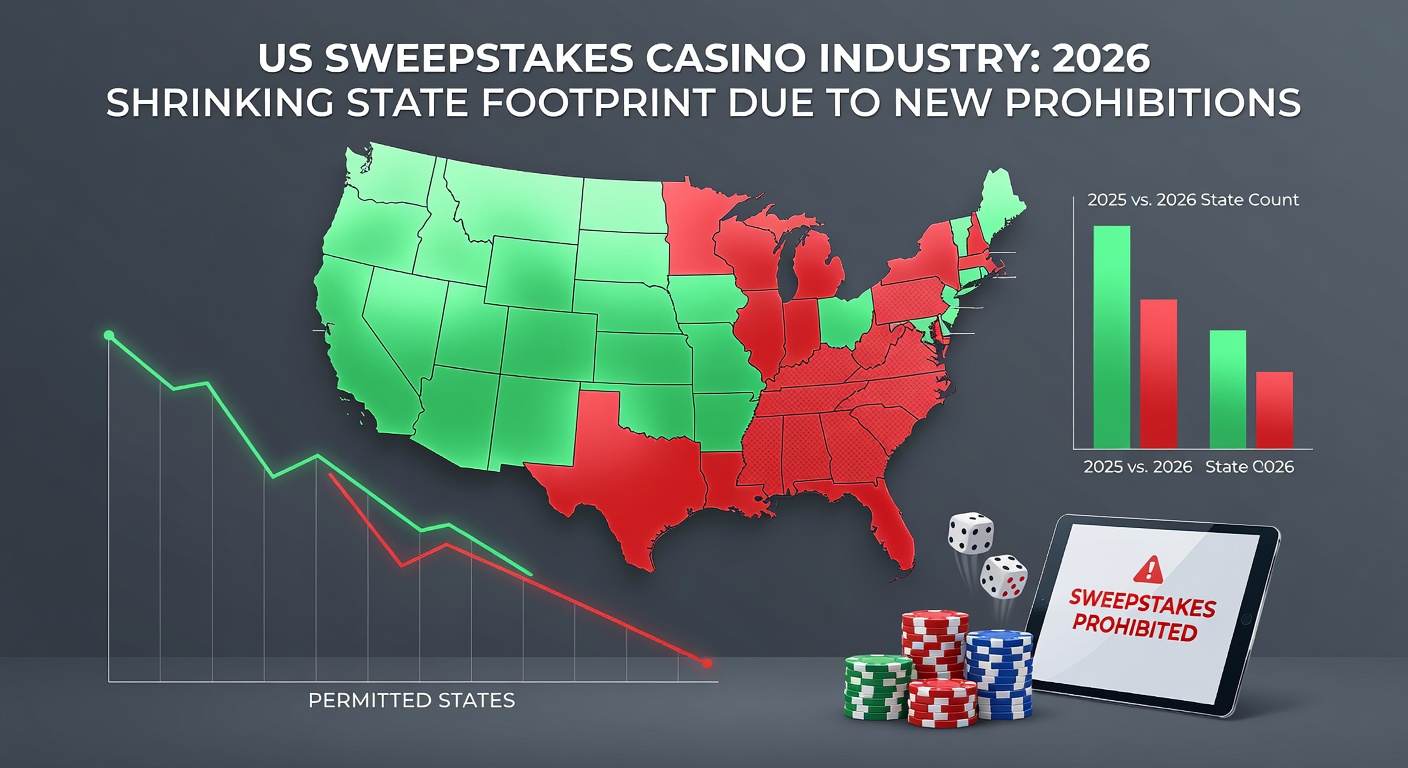
California’s Assembly Bill 831 took effect on January 1, 2026, and immediately restricted sweepstakes casino operations across the state, while Indiana followed with House Bill 1052 signed in March 2026 and scheduled for enforcement on July 1, 2026, continuing a pattern that included multiple 2025 closures in New York, Maine, and additional jurisdictions.
These measures reduced the number of states where sweepstakes platforms could offer dual-currency mechanics, and operators responded by exiting certain markets or modifying their product offerings to comply with updated rules.
Legislative Actions Reshape Market Access
Assembly Bill 831 established clearer boundaries around promotional sweepstakes models that combine free and paid entry systems, and House Bill 1052 introduced parallel restrictions that target redemption processes and marketing language used by sweepstakes sites. Observers note that both statutes emerged after earlier enforcement actions in other states had already prompted several platforms to withdraw services or restructure their user agreements.
Data from state regulatory filings indicates that the combined effect of these laws has narrowed the geographic footprint available to major operators by mid-2026, with additional compliance reviews underway in other legislatures that previously tolerated the format.
Operator Responses and Strategic Shifts
Virtual Gaming Worlds, parent company of Chumba Casino and related brands, began exiting multiple states following the new prohibitions and simultaneously introduced separate gaming properties that operate without dual-coin mechanics. Company statements detail adjustments to redemption thresholds, enhanced responsible-play messaging, and revised marketing campaigns that emphasize skill-based elements over sweepstakes promotions.
Payment processing partners also received updated instructions to align transaction flows with the revised state requirements, and several platforms redirected advertising spend toward jurisdictions that still permit the original model. Those who have tracked these changes point out that similar adaptations occurred after the 2025 round of closures, suggesting an ongoing cycle of product iteration under regulatory pressure.
Market Conditions Observed by May 2026
By May 2026 the enforcement timeline in Indiana remained several weeks away, yet platforms had already begun preemptive modifications to user interfaces and terms of service in anticipation of the July 1 deadline. California operators that remained active reported narrower player acquisition channels and increased scrutiny on promotional materials, while companies that chose to exit documented the migration of user bases to compliant alternative offerings.
Industry filings and public announcements reveal that some groups launched new brands built around single-currency systems, and others strengthened partnerships with payment processors that specialize in regulated environments. These developments occurred alongside continued litigation in states where earlier prohibitions faced legal challenges, creating a patchwork of active and restricted markets.
Broader Patterns Across Jurisdictions
Analyses of state legislative calendars show that additional proposals targeting sweepstakes mechanics appeared in committee hearings during the first half of 2026, building on the precedents set by California and Indiana. Companies that operate across multiple states have implemented centralized compliance teams to monitor these developments and coordinate rapid response strategies when new rules receive final approval.
Records from earlier enforcement periods demonstrate that operators often test revised redemption limits and marketing language in limited markets before rolling changes out more widely, and similar testing appears underway in states that have not yet enacted prohibitions. External reporting from regulatory tracking services confirms that the pace of state-level activity increased after the 2025 closures, with several bills modeled on the language used in Assembly Bill 831 and House Bill 1052.
Conclusion
The sequence of prohibitions that began in 2025 and continued through California’s January 2026 implementation and Indiana’s July enforcement date has produced measurable contraction in the states where traditional sweepstakes casino models remain available. Major operators including Virtual Gaming Worlds have documented exits, brand launches without dual-coin features, and adjustments to redemption and messaging protocols in response to these statutes.
By May 2026 the industry operated under a reduced footprint while preparing for further compliance deadlines, and ongoing legislative activity suggests additional jurisdictions may introduce comparable measures before the end of the year. These developments reflect a sustained period of regulatory evolution affecting how sweepstakes platforms structure their offerings and conduct business across state lines.